

Tencent's HKU Hackathon Is Signalling Who Gets To Shape Asian AI Creative Talent
On 16 April 2026, Tencent Cloud kicked off its "AI CAN DO IT" Game Development Hackathon at the University of Hong Kong, the opening event of its 2026 Tencent AI Campus Tour. The prizes are large, the brand is familiar, and the theme is creative AI. Read past the launch copy and the real story is different. Tencent is building a curriculum-adjacent pipeline for Asian AI creative talent, and it is doing it before any Western or Korean equivalent gets close.
What The Hackathon Is Actually Doing
The competition spans five Asia-Pacific regions: Hong Kong and Macau SAR, East China, North China, South China, and Southeast Asia. Students compete in three pillars framed as Social Good, Cultural Expression, and Narrative Innovation. That framing is deliberate. It positions AI not as a coding accelerator but as a creative engine, and it aligns squarely with how Chinese policymakers talk about AI as cultural soft power. Winning teams from regional selections advance to global finals at the 2026 Tencent Global Digital Ecosystem Summit in September.
The prize pool is valued in the millions of Hong Kong dollars, with top individual incentives reportedly reaching HK$100,000. For Hong Kong and Southeast Asian students, that is meaningful early-career capital. But the real prize is the pipeline: Tencent Cloud credits, direct access to Tencent AI infrastructure, and a fast track into internship and recruitment channels. The hackathon is the front door. The recruitment and training funnel sits behind it.
By The Numbers
- 5 regions covered: Hong Kong / Macau SAR, East China, North China, South China, and Southeast Asia.
- 3 pillars framing the competition: Social Good, Cultural Expression, Narrative Innovation.
- HK$100,000 top individual prize cited in Tencent's launch materials.
- 16 April 2026 launch date at the University of Hong Kong.
- September 2026 global finals at the Tencent Global Digital Ecosystem Summit.
Why This Is A Curriculum Play, Not A PR Event
Tencent is positioning cloud credits, AI APIs, and tool training as part of university computing and design curricula. The campus tour visits more than a dozen Chinese and Hong Kong universities over 2026, hosting workshops on Tencent Hunyuan, its flagship foundation model family, and TokenHub, its recently renamed model-as-a-service platform. Students graduate from the hackathon fluent in Tencent's toolchain, which is exactly where a cloud giant wants them to be when they enter industry.
Compare that to the equivalent Western play. OpenAI and Anthropic do not run university hackathons at this scale in Asia. Microsoft Azure AI and AWS have student programmes, but they are global and generic, not region-specific and curriculum-embedded. Korean players like Naver and Kakao run smaller initiatives, and Baidu and Alibaba Cloud are doing something similar to Tencent but with less design-and-creative framing.
The hackathon is positioning AI as an engine for imagination, not a code-generation shortcut. That framing matters for how the next generation of Asian creators think about AI tools.
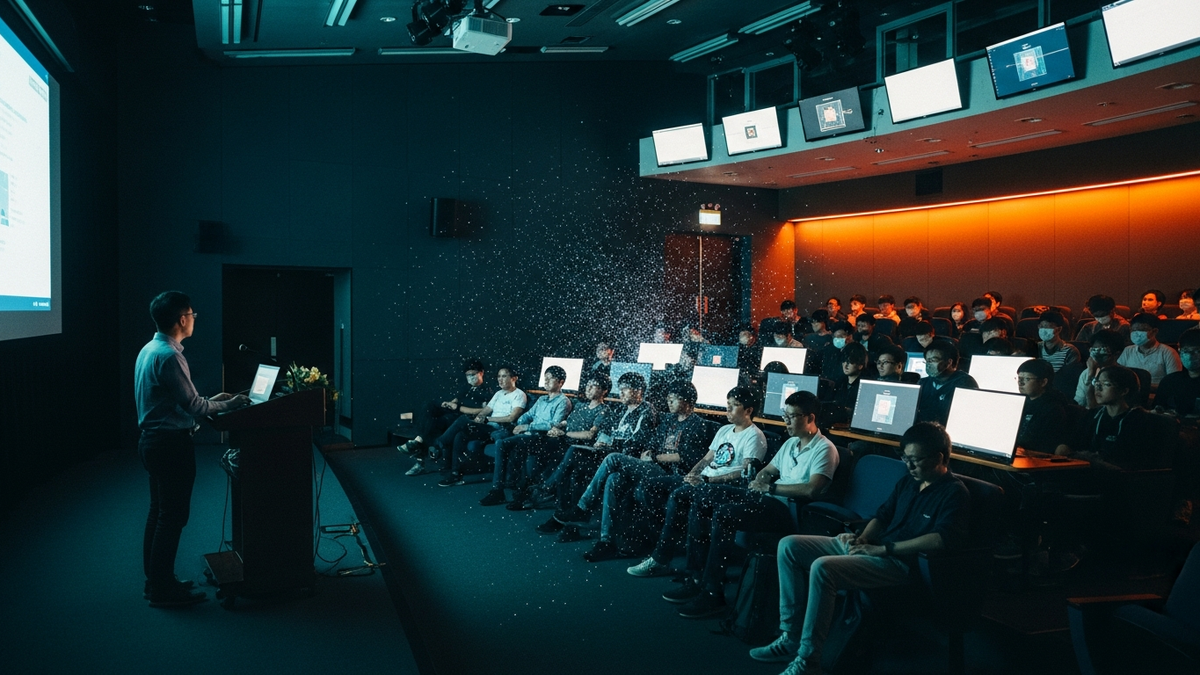
If you are a Hong Kong computer science student in 2026, you are going to graduate with a Tencent stack in your muscle memory. That is a competitive advantage for Tencent and a decision point for universities.
What This Means For Asian Creative Tools
There is a downstream consequence that will reshape the creative tool stack across Asia. If the next generation of Asian game designers, filmmakers, and narrative artists comes up on Tencent's models, prompt patterns, and APIs, the region's creative output will be shaped by Tencent's model alignment, safety filters, and content policies. That is not automatically a problem: Tencent Hunyuan is technically strong, and its Mandarin and Cantonese performance is best-in-class for Chinese-language creative work. But it is a soft-power outcome that nobody else in the region is engineering.
The implications for Asian creative tool companies are sharp. WeryAI, the Singapore-based creative AI aggregator we covered recently, sits downstream of this: if student creators are trained on Tencent stacks, the aggregator layer either integrates Tencent tightly or loses addressable market. Japanese creative AI firms like AI Picasso and MorphoAI have a similar choice.
The Competition Tencent Is Inviting
The more interesting question is why other cloud giants are not running an equivalent programme. Alibaba Cloud hosts developer conferences and a smaller hackathon circuit, but nothing at the scale of the AI Campus Tour. Baidu's AI Studio is a strong tool offering but is not wrapped in the curriculum-and-creative framing Tencent has chosen. Western cloud AI teams have no equivalent Asian university footprint at all. That leaves Tencent with a genuinely uncontested lane.
Expect that to change. Alibaba is already rumoured to be planning a larger 2026 university initiative focused on agentic AI curricula. Korean and Japanese firms may respond, but they lack the scale to run a five-region Asian campus tour without a pan-regional partner.
| Programme | Operator | Reach | Framing |
|---|---|---|---|
| AI CAN DO IT Hackathon | Tencent Cloud | 5 APAC regions, 12+ universities | Creative, cultural, narrative |
| Alibaba Cloud University | Alibaba Cloud | Primarily mainland China | Enterprise, developer |
| AI Studio | Baidu | China, limited SEA | Developer, research |
| Microsoft Imagine Cup | Microsoft | Global | Student entrepreneurship |
| AWS AI Scholar | AWS | Global | Infrastructure, ML engineering |
The Asian creative AI story is one we keep returning to. See our reporting on WeryAI's rise as a creative AI aggregator, Korean webtoon studios automating the hardest part of the craft, and our look at China's AI agent token economy that reveals how Tencent's cloud economics drive these programmes. For the creator-economy side, the Grab consumer AI rollout offers a complementary view.
Frequently Asked Questions
Is the hackathon open to non-Chinese students?
- Yes. The Southeast Asia regional track is explicitly open to students across ASEAN, and the Hong Kong / Macau SAR track includes international students attending regional universities.
What tools will participants use?
- Tencent Hunyuan foundation models, Tencent Cloud AI APIs, and TokenHub model-as-a-service infrastructure. Participants receive Tencent Cloud credits and access to the company's AI development stack.
Are there privacy or data-residency concerns for SEA participants?
- Submitted work and training data may flow through Tencent Cloud endpoints, which can sit in mainland China or Hong Kong. SEA universities are expected to review data-handling terms before endorsing student participation.
What is the equivalent programme from Alibaba or Baidu?
- Alibaba runs developer conferences and a smaller hackathon circuit through Alibaba Cloud. Baidu hosts AI Studio challenges. Neither currently matches the five-region, curriculum-embedded scale of Tencent's AI Campus Tour.
If your country's universities want sovereign creative AI capacity, how do they balance Tencent's generous offer with the lock-in risk? Drop your take in the comments below.